Monday, February 28, 2011

Wine Tutorial: Getting Started with Wine Tasting–Part 1

By Mac McCarthy
First published in Zenergo--Activate your Life!


Consider this a cheat sheet for wine beginners.

When you want to start or join a wine group in Zenergo, or find a wine-Activity friend, or go to a wine Event — it can be intimidating if you’re just getting started learning about and enjoying wine. Jargon, buzzwords, pompous wine twits, puzzling wine-bottle labels, and so many types, prices, and opinions!

First piece of advice: Don’t let it get to you. Rule One in wine — and the only real rule — is Find Out What You Like!


When you taste a wine, you either like what you’re tasting, or you don’t. Nobody else can tell you what you’re supposed to like — it’s your taste buds, and your preferences. If you hate red monster wines and they like ‘em — great! That’s what makes horse races.

And Rule Two: Try New Wines! You’ll find more you like.

Over time, your tastes will change and develop as you try more wines. So don’t jump to conclusions too fast — you may not like this kind of wine now, but another winemaker, making wine from the same kind of grapes, will make it very differently — and you may like that. The only way to know is to try!
Of course, you could go broke buying random bottles of wine to see if you like them. So don’t do that.

Do this instead...
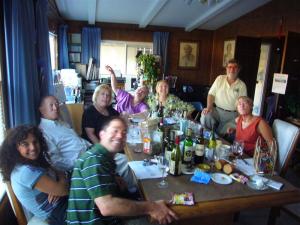
BAWDY--Our Winetasting Group
BAWDY--our amateur winetasting group--it's all about fun, not formality!

1. Go to wine parties. Or hold wine-tasting parties of your own, with your friends. Or make wine-tasting friends on Zenergo and try wines together. Sharing gives you more choices and more tastes, and costs less.

2. Go to wineries. Every state in the USA has winemakers — and most countries of the world too. There’s probably a winery association in your area — they’ll have guides and maps and special events and tourist weekends. Visiting wineries is a great weekend activity!

3. Buy cheap wines. Not just box wines or jug wines — they can be easy to drink, but they aren’t good examples of what wine can be. You can find very interesting wines in your supermarket these days, or at your Trader Joe’s or other specialty grocer. You’ll actually find wines for less than $5 — some of them quite tasty. The great thing about picking up bottles of Two-Buck Chuck, for example (Trader Joe’s famously cheap wine brand) is that if you don’t like a bottle — it was only two or three bucks, you can pour it out, it’s no big loss. You’ve at least learned you didn’t like that one.

4. Keep track. Keep a notebook — just jot down the wines you find you like. That way you can get it again next time, because I promise you that you won’t be able to remember exactly which ones were which. And write down the exact info on the wine label: The maker, the year, the name of the wine, and any other special words, like Reserve, or Estate Bottled, or the name of a vineyard. Wineries make lots of different wines, and they can vary a lot in how much you like them. You might love the “Gallo Sonoma Reserve” and then get a bottle of the “Gallo Sonoma Cellars” and find out it’s very different, and that you don’t like it at all.

So you have to pay attention to a lot of detail on the wine label, unfortunately. So fair warning – if you really like something, write down the stuff on the label. “Gallo Sonoma Reserve 2005 Merlot,” for example, tells you that it’s made by/for Gallo, it’s more or less from Sonoma County in California, it’s their “reserve,” which usually means it’s their better stuff, it’s grown in 2005, and it’s a Merlot grape wine. All 5 of those facts are meaningful – the Gallo Cabernet, for example, will taste very different, and the 2004 Merlot may taste better, or worse.

(Good luck with French or German wines — there’s so much hard to decipher info on the label.)

Your Wine Cheat Sheet–Part 1: Backgrounder on Red Wines
We’ll start by giving you an overview of the main grapes made into wine — like Merlot and Cabernet — and the main countries noted for their red wines. In our next blog post, we’ll look at white wines, roses, champagnes, and dessert wines.

Even if you don’t like reds, scanning this blog post will let you keep up with wine-snob chitchat.
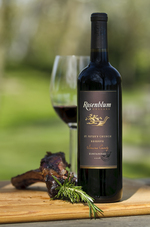


Red: A Rosenblum St Peter's Church Zinfandel
Red Zinfandel: A Rosenblum St Peter's Church Zinfandel, California

Red Wines in the United States
In the US, what the wine is called is usually based on what grape makes up most of the bottle, like Merlot or Cabernet Sauvignon.

In some parts of the world, like France, what the wine is called is based on the name of the area where it is grown – like Burgundy, or Bordeaux, or (in Italy) Chianti – and not on what grape is. But don’t worry about it. Areas tend to use specific grapes, such as Pinot Noir in Burgundy or Gamay in Beaujolais.

In the US the main RED wines you’ll find are: Cabernet Sauvignon, which can be robust and dense and “big” – more intensely flavored; Merlot, which can be somewhat lighter, with softer tannins (that tongue-stinging sensation like teabags) than Cabs and thus more “approachable;” and Zinfandel, the red version (not the white), which can be jammy and intense (and higher in alcohol). Pinot Noir makes lighter wines that are still very flavorful and vary a lot depending on the maker. Syrah is increasingly popular among the hip and can range from dense to very dense. ShirazSyrah, common in Australia, and can be light and fruity and very easy to drink. And Petite Syrah, which is less common, varies greatly in taste from winemaker to winemaker, and which a beginning wine drinker usually doesn’t like at first. Barbera is the main component in many Italian wines, and in the US can be made into a flavorful, fruity, easy-to-drink wine.
There are other grapes bottled in the USA that you’ll come across once in a while, and new ones being tried out all over the country, like Cabernet Franc, Primitivo, Charbonno, Nebbiolo, Carignane, and Gamay, and a hodgepodge of other lesser-known grapes. Never pass up a chance to taste something you’ve never heard of!

Red Wines in France
2011-Bordeaux Grand Cru tasting, San Francisco--A Lunch Bage
Chateau Lynch-Bages--a $$ "Grand Cru" French Bordeaux.

Very light red wines from France that are easy to drink for beginners include Beaujolais and Beaujolais Nouveau, and an American cousin, Gamay Beaujolais. Beaujolais is pronounced the French way—that is, stupidly: Boo-Joe-Lay (except the Joe is a soft J, not a hard J like in Joe – ask somebody) – Beaujolais Nouveau (Noo-Voh) is a Beaujolais fresh from the barrels and not aged at all – it comes out Thanksgiving week and is great that week – and more awful every week that goes thereafter. Try it. it’s fun! (Beaujolais are made from the light-and-fruity Gamay grape.)

Burgundies can also be very tasty and easy to drink, light yet flavorful; they are made from Pinot Noir grape, but good Burgundies can be expensive. Very expensive. Very very expensive. So if somebody brings in a Burgundy, make that little eyebrow-raising “Well! I’m impressed” expression so the host will feel flattered – and will think you’re savvy. Score!

Also popular, with a distinctive aroma some love and some don’t, are French RHONE wines (pron. Roan or Rone), which are made of a blend of wines usually starting with a light fruity fun grape called Grenache, plus Syrah to give it some punch, and other random grapes like Mouvedre and Cinsault that you never heard of–up top a dozen grapes in the blend. No way to tell whether you’ll like them until you’ve tried them. Both Rhones and Burgundies (and Bordeaux) can vary widely in taste from winery to winery so if you try one sip and don’t like it, do try sips on other occasions from other makers.

Red Wines in Italy
In Italy, Chianti is easy to drink because it’s not very intense. There are intense Chianti’s, called “Super Tuscans,” that have more flavor, but even these are easy for a beginner to try. Chianti in general is a safe bet as a wine that won’t scour your mouth out. It is based on the Sangiovese grape, which is mellow; California makes a small amount of Sangiovese-based wines too. Another grape, called Tempranillo, bottled in Italy and elsewhere under various names, as well as in the US in small quantities, is also a safely mild wine. Also easy to drink is anything called Valpolicello, which I think is a Sangiovese wine.

Barberas, Brunellos, Nero d’Avola, and Primitivo wines can be stronger, more intensely flavored, but not too tannic, so give them a try – I love them; you might want to work your way up to them. (Primitivo is a Sicilian relative to American Zinfandel, by the way.)

Reds in Other Countries
There are a number of reds from Spain that are gaining popularity. Rioja (ree oh hah!) is the best known, and is usually milder than it likes to think it is. Mostly the popular reds tend to be somewhat heavy-duty, so sip cautiously.

Chile and Argentina make wine from a grape called Malbec (which is only a blending wine in France) – these used to be very cheap but very nasty, but Argentina, in particular, has learned how to make a truly wonderful, grand wine out of it. A great Argentine Malbec can compete head-on with a good California Cabernet — and unfortunately is priced similarly.

OK, that’s a start. Is your brain full yet? You may have to go try a glass of red wine, then!

In PART 2 we’ll look at Roses, Whites, Champagnes, and Dessert Wines!


Got comments? Post below! And SHARE with your friends, especially those just getting started in the wonderful world of wines!

Friday, February 18, 2011

Wine 101: A Series for Beginning Wine Tasters

For those of you who have friends who are new at wine tasting, have them take a look at the first three posts I made to my Zenergo.com blog at http://blog.zenergo.com/ -- The third post, at the top of the page, is advice: What wines it's safe for a beginner winetaster to buy -- and what it's not safe to try. Meaning: What you're most likely to enjoy, and what is probably too intense for a beginner.

This is a good article to send your friends and relatives too -- or even your wine-tasting group members!

Scroll down that blog to see another two postings that are informational: All about Red Wines, and the countries they come from; and all about White, Rose, Champagne, and Dessert Wines.

(Give them a red yourself -- I've had longtime winedrinking friends tell me they've learned a couple of interesting things from these three articles!)

Monday, January 31, 2011

2008 Bordeaux Tasting: Where's the Fruit?


 Grand Cru tasting leaves me scratching my head.


Bordeaux are supposed to be the finest, most refined, subtle, quietly complex wines in the world. At the 2008 Vintage trade tasting hosted January 21st at San Francisco's Palace Hotel by the Union des Grands Crus de Bordeaux, I discovered to my disappointment that the 2008 red Bordeaux are uninteresting because their crisp tannnins lack the balance of fruit. Age will soften the not-overdone tannins, but how can it reveal invisible fruit?

This is in contrast to the 2006s, which while they had stronger tannins to the point where tasting them was almost painful, yet at the same time they showed such depth and richness and density and complexity that you could easily see how age will soothe and reveal.

But not the 2008s. None of the reds charmed me, disarmed me, or rose above blandness, in my humble opinion. The St. Emilions showed slightly more fruit, as did the St.-Juliens -- or any fruit at all, really. I still wouldn't cross the street for them, or cross the room.

These are solid brands, too: Château Batailley, Château Beau-Séjour Bécot, Château de Rayne Vigneau, Château Doisy-Daëne,  Château Grand-Mayne, Château Grand-Puy-Ducasse, Château Haut-Bages Libéral, Château Haut-Bailly, Château La Tour Blanche, Château
Ch. Leoville Barton
Léoville Barton, Château Léoville Poyferré, Château Lynch-Bages,  Château Phélan Ségur, Château Pichon-Longueville, Château Smith Haut-Lafitte -- decent, well regarded wines, every one.

Plainly I am not an experienced taster of young Bordeaux. I didn't see anyone else wrinkling their noses or looking disappointed, so maybe it's just me. But I love Lynch-Bages, and the representative from that area (there was only one Lynch-Bages, I don't remember which) showed me nothing at all. The best reds poured were merely tolerable.

The whites, by contrast, were just fine, thank you very much. The Sauv Blancs, and the SB/Semillon blends, were good. The Sauternes were rich and sweet, complex and delicious, toe-curlers, every one -- not a loser in the bunch.

St-Juliens
I'd list specific wines and notes but none of the reds rose above a "B," so there hardly seems any point. If you have a chance to pick up a case of some of these 2008s, wait a year before trying them. And good luck. I hope I turn out to be wrong (or simply misinformed).

And I might be, though style and approach should not be excuses for a lack of flavor and depth. "Subtle" is supposed to be a virtue, not an excuse. I understand the French downplay fruit because theirs are beverage wines, not cocktail wines -- but this is ridiculous!

Delicious Sauternes!
I was vastly amused to bump into Miguel Boscana, of Rosenblum Cellars, who poured his own disdain on the Bordeaux for utter lack of fruit. These wines, of course, represent the complete opposite of Rosenblum's fruit-forward approach to Zinfandels. He insisted that the French don't know how to, or haven't the weather for, or possibly lack the taste for, fruit in their wines.

French red Bordeaux are, it's true, a complete crap shoot for moderately active American wine drinkers: At their best they are stunning; on average they are disappointingly bland.

What am I missing?

Sunday, January 16, 2011

"Blanding" Just A Matter of Taste?

Last week, my long-time colleague Dan Berger expressed the opinion that American wines are undergoing a "blanding" in which varietal fruit flavors are getting fainter and fainter. Dan thinks that's a bad thing.

Over the past several months, I've used SavvyTaste (get the Facebook App here) to share quite a few wines that I thought lacked fruit. Among those wines were Charles Shaw (Two Buck Chuck), Oak Leaf Vineyards and almost everything else in the $3 to $4 category.

I found most those wines too bland for my taste.

For my taste.

But NOT for the millions of people who buy them. Obviously sales speak for themselves and illustrate that there is broad support for those wines.

But as we have emphasized over and over at SavvyTaste, genetic variations and many other factors influence how we experience wine individually. What is too bland, or too sweet or too-anything-else for me can likely be the perfect match for someone else. That does not make them bad wines or their fans inferior tasters.

But obviously, Dan's palate -- and mine -- are not good matches for people who like wines with faint fruit. There is a market for those wines, just like there is for bigger, more fruit-forward wines that I like.

It's all a matter of taste.

That's why SavvyTaste's goal is nor to RATE wines, but to SHARE them in order to connect people with the same taste preferences. Go ahead, get the app and give it a try.

A FINAL WORD: Interestingly, I did find the the Oak Leaf Vineyards Pinot Grigio ($2.97 at Wal-Mart) had a lot more fruit than many that cost $15 and up.

Wednesday, December 22, 2010

How to Pick the Best Bottle of Sparkling Wine for the Holidays!

A *wonderful* article about all the many Champagnes and bubblies from around the world, and how their tastes compare!

http://www.thirstygirl.com/index.php/quaff/article/bubbly-101-how-to-pick-the-best-bottle-for-the-holidays/
  

Friday, November 19, 2010

Join a Wine Club like 4 Seasons Wine from an email "special offer"? I don't think so....

A friend writes that he received a "special offer" by email to get a case of unspecified wine for $69.95. He wanted to know if this sounded good. (As it happens, he lives in Oklahoma, which still forbids import of wines such as from wine clubs or wineries.)

My response, which may be useful/interesting to you/friends.


4 Seasons Wine is a wine club - you join and they send you wines every month or quarter for a set fee -- they decide the wines.

Me, I wouldn't join a random wine club over the transom like this. There are too many wine clubs with solid reps, like the California Connoisseur's Club, and the Wall Street Journal Wine Club, and the SF Chronicle Wine Club. 

Equally good are wine clubs of wineries you visit and like their wines.

Bummer about Oklahoma's liquor laws. The Supremes invalidated these laws a couple of years ago, but states like OK have been dragging their feet and coming up with excuses, in response to those holding the legislature's leash, namely the liquor distribution companies. This is corruption as basic and ugly as any.

PS People you know in other states can mail you (or ship you by UPS or FedEx) booze from their states; the laws refer to commercial entities -- wineries -- shipping wine into their state. UPS and FedEx generally don't even ask what's in the package (and if they do, say "Olive Oil"), nor do they care as long as it doesn't blow up.

Saturday, November 13, 2010

Three Tasty Whites--Passaggio, Foppiano

--By Mac McCarthy

I've never been much of a white-wine fan, always preferring reds. But over the past year I've been finding more and more whites that capture the interest of my taste buds with their flavorfulness and pleasant tang.

The initial provocation was an unoaked Chardonnay from Cynthia Cosco's Passaggio brand, "New Generations California Unoaked" from 2008, priced at $14 at the winery--which is at The Crushpad custom-crush facility, where Cindy is manager. That Chardonnay redeemed the reputation of Chardonnay to my taste buds with such enthusiasm that I find myself these days, when attending tastings, checking the Chardonnays and other whites before heading to the red end of the pool.

The Passaggio Chard was just plain flavorful. You'd take a sip, and a few moments later, you'd really want another sip. Not my usual reaction to Chardonnay.

More Chard makers, it seems, have been experimenting lately, looking for solutions to the 'oaked Chardonnay problem," but hers is the most successful. So for my birthday treat this year, I drove with my wife up to the Crushpad's new facility on the Silverado Trail in Napa, where they now have a tasting facility, to get a case of Cindy's current release--the 2009, which has risen in price to a more rational $16. Still, I'd be saving myself a lot in shipping charges.

I discovered that Ms. Cosco has been experimenting further, producing a Passagio 2009 New Generation California Pinot Grigio. Good! PG's are all too often watery; my guess would be that the Cosco PG would be anything but watery. So I picked up a couple of bottles of that too.

By happy good luck, Foppiano Vineyards sent me a few days later a bottle of their first experiment in Chardonnay, their newly released 2009 Russian River Valley Estate Bottled Chardonnay.

So let's taste all three whites and see what we think.

Spoiler alert: Nice! Warning: These wines are all newly bottled current vintages, so they will be barrel-sample fresh but with no aging to integrate any of the elements. With luck, these will only get better over the next year or three, I would think.

PASSAGIO WINES 'NEW GENERATION' CHARDONNAY CALIFORNIA UNOAKED, 13.4%, Silverado Trail, Napa, CA
$16 http://www.passaggiowines.com

Like last year's vintage, this Chardonnay, being unoaked and with no malolactic fermentation, has none of the buttery, vanilla flavors characteristic of the standard California Chardonnay style beloved of chain restaurants, by-the-glass bars, and college girls. Instead, the Passaggio Chards are, as the site says, "clean, light, and crisp." The fruit comes out much more strongly, and the acid, giving this wine a lot of flavor, and a lightly crisp red-grapefruit tang that lets it work well as a 'beverage wine,' as I call them -- in other words, a food-friendly wine. I plan to open a bottle for Thanksgiving.

I have to say that the 'flavorfulness' didn't seem to me to be as pronounced upon first opening the bottle as it was last year. Not sure what I mean by 'flavorfulness,' except that it's a lip-smacking quality that lacks technical precision but definitely has you reaching for another pour. The next day, however, the Chard calmed down a bit, the acid settled down, and more fruit came up to balance it. Yet this is a very tasty, rounded wine that I'm glad I have a case of. You should have a case of it, too.

By the way, Cindy's wines are sealed with a Zork, which is a plastic cork attached to a plastic cap -- you can remove the plastic seal and open the wine without needing a corkscrew, then push the Zork back in like a cork to reseal -- great for picnics!


FOPPIANO VINEYARDS RUSSIAN RIVER VALLEY ESTATE BOTTLED CHARDONNAY 2009, 14.5%, Healdsburg, CA
$22, http://www.foppiano.com

This bottle is Foppiano's first venture into Chardonnay, their legacy wine being Petite Sirah as well as Pinot Noir. This is also only the second vintage released by the winery's new winemaker, Natalie West.

This wine is the opposite of Cindy's Passaggio Chard, in that it was fermented in oak rather than steel barrels, and put through malolactic fermentation. Yet it's not so radically different -- flavorful, with a nice tang, similarly food-friendly, and well rounded. This may be because of the restraint in the winemaking: The wine was fermented only 35% in new French Oak, the rest in neutral French oak, and only a third went through malolactic fermentation -- just enough to give it a hint of creaminess without turning it into an overly buttery Chard archtype. The result is quite a success, especially for a first vintage!

PASSAGGIO NEW GENERATION PINOT GRIGIO 2009 CALIFORNIA, 13.4%
$14, http://www.passaggiowines.com

I was happy to get a chance to see what Cindy can do with this grape. Pinot Grigios can be all over the map -- wonderful aroma and no flavor, just water; less aroma but more flavor; and no aroma and no flavor, just pricey water. Even Cal-Italia makers are unpredictable. My hope was that Cindy would be able to bring her flavor-enhancing skills to this wine.

And indeed she does. It has no particular nose, but it's got enough mouth-filling flavor to compete with a Chard. Yet it's not heavy or overdone, either: Again, a nice light crispness, which will make it a great palate-cleanser at our Thanksgiving dinner this year. My technical wine-reviewer verdict: Yum.

I can't believe it, but youse guys are turning me into a white-wine lover! Well, enjoyer, anyway. I've been discovering Chenin Blancs--CheninBlancs?! Bad enough I have an infinity of interesting, fun, delicious, varied red wines still to taste -- now I have another infinity of whites to experiment with? What have you done!

Wednesday, October 13, 2010

Beverage vs Cocktail - Can't anybody get this right? Not even Eric Asimov!

NYT wine critic Eric Asimov reports today on a tasting of California Zinfandels:
http://www.nytimes.com/2010/10/13/dining/13wine.html?_r=1&src=dayp


...and starts off by complaining about the "huge, dense, powerful monsters, pushing past 16 percent alcohol and overwhelming any food in their paths."


Me, I love these huge, dense, powerful monsters, and the alcohol level doesn't bother me. But then, I recognize that these popular styles of Zin are crafted as "cocktail wines." 


An understanding of the difference between Cocktail Wines and Beverage Wines would clarify the thinking of many a wine critic, even Eric Asimov: 


The bomb-Zins don't pair well with food?

Well, they're not made to pair with food!

They're cocktail wines.

If you were tasting 20-year Scotches and judging them based on which ones pair well with food, you'd be laughed out of the bar. And if you complained that the Kentucky sippin' whiskey in your glass have alcohol levels far past 16 percent -- well, they'd be looked at as if they landed from Mars.

It astonishes me that nobody in this business seems to get this distinction. Not even the Zin makers I talk to.

Beverage Wines are food-friendly wines -- they have the characteristics of a beverage that you drink with your meal: They wash down the food, have a little acid to clear the palate, are light but (when done well) flavorful, and don't clash with the food flavors and textures. That's why European wines are so light; that's how they fit into the meal.

Cocktail Wines are meant to be tasted by themselves, not with food. How can you eat even a burger with a Rosenblum Rockpile Zin yelling in your ear? You can't. It's wrong for the hamburger -- it's wrong for the Zin. It shows a lack of respect for your drink. 

When you go to a cocktail party, they'll have munchies to clear your palate, but the focus is on the cocktails. When you go to dinner, the focus is on the food, and the wine has to fit in, not the other way around. You don't go to a cocktail party and ask the hostess which food the Margueritas go with!

And it's not a question of which style is the better style. Each is suited to its own place. And not suited to the wrong place. As long as you can't keep this distinction straight in your mind, you will go through life, like Eric Asimov, confused by what you're drinking, because you're drinking it backwards!

Saturday, October 9, 2010

Rock Me Redux

Rock Me Redux
By John Engstrom

Well lucky, lucky me. After I posted the “Rock Me Baby” blog piece, (see below) I sent a link to it to Gary Branham, Clay Mauritson and Carol Shelton among others. Clay then sent me an invitation to attend the ‘Rockpile Rocks at Rock Wall’ event on September 8. Most of the wineries that use Rockpile grown grapes were there, along with several growers. There are no wineries actually in the Rockpile AVA. Those wineries that use Rockpile grapes either contract with growers or own vineyard property within the appellation.


I arrived at the Rock Wall winery in Alameda a little early, so I was graciously invited to sit with Shauna Rosenblum, Chelsea Blackburn and the rest of the Rock Wall crew as they finished their lunch, and then walked into the tasting. Well, first I was humbled. Charles Olken, of the Connoisseurs’ Guide to California Wine was there. I had met Charlie before, many years ago. He then introduced me to Steve Heimoff of Wine Enthusiast magazine. Okay, now I feel like a small fish in the big sea of wine writers. These are two guys that know what they are doing.

There were tables laid out in a horseshoe pattern, with one winery per table, so I decided to just make my way around. The first table was Seghesio where Ted Seghesio was pouring three vintages of Seghesio Rockpile Zinfandel; 2005, 2007 and 2009, the latter being a barrel sample. The second table is J. C. Cellars where Jeff Cohn was pouring two vintages each of his Haley’s Vineyard Syrah and Buffalo Hill Syrah. The third table has Gary Branham pouring the Branham Rockpile Zinfandel, Petite Sirah and Senal, a blend of Zinfandel, Cabernet, Petite Sirah and Syrah. Next was Paradise Ridge where Dan Barwick stood with a three year vertical of Zinfandel and a three year vertical of Cabernet, along with the afternoon’s only Merlot. I can’t get to the next table yet, as videographers are talking to the father and daughter winemaking team behind Rock Wall, Kent and Shauna Rosenblum. So, I mosey on over to the table that invited me, Mauritson, where Clay Mauritson is pouring the Rockpile Ridge and Cemetery Zinfandels, the Buck Pasture red blend, a Malbec, and a Petite Sirah. Next is the Carol Shelton table where Mitch Mackenzie and Carol Shelton are hosting a ten year vertical of Rockpile Zinfandels, with a Cabernet Sauvignon and a Petite Sirah for good measure. Finally, the host table is vacant enough to try the Rock Wall wines that start with a Chardonnay?! Actually, the Chardonnay isn’t from Rockpile, but Rock Wall is offering it as a palate cleanser and because their only Rockpile wine is barrel samples of their 2009 Zinfandel.

After tasting these wines and talking with the winemakers, I have discovered a few things. Although there are 15,000 acres of land in the Rockpile AVA, only 160 to 170 are planted to grapes. Furthermore, there are only about 50 more acres that can be planted to grapes. The rest isn’t rocky soil, it’s just plain solid rock, or it’s on such a steep slope, you would have to be a mountain goat to tend the grapes. This rocky soil expresses itself in all of the wines made from Rockpile grapes as a mineral flavor that to me is akin to graphite, though I also heard it defined as slate. Whatever it is, it is inescapable and distinctive.

All of Rockpile is at 800 feet or higher, up to 2,100 feet. This means all the vineyards stay above the fog level due to an inversion layer created by nearby Lake Sonoma. You would think that the lack of fog would make Rockpile hotter than nearby Dry Creek, when in fact the opposite is true. The daytime highs are actually 10 to 15 degrees cooler than the Dry Creek valley floor during the growing season due to the 10 to 15 mile-per-hour gusts of wind coming off of the Pacific Ocean. These winds reduce grape size, and create looser grape bunches. The looser grape bunches mean less rot and more even ripening, which is especially important in Zinfandel. The reduced grape size leads to greater skin to juice ratios which means the potential for greater flavor extraction, as well as greater tannin extraction. These tannins give the wines a huge aging potential, and loads of complexity. They can also be rather astringent, especially in wines made from grapes with a lot of tannin anyway. It’s going to tale a long time for the tannins to resolve themselves in most of the Cabernet Sauvignons I tasted, and it may be decades before the Petite Verdot and Petite Sirah wines are fully ready.

There are no old vines in Rockpile, unless you consider teenagers as old. The oldest vineyards in Rockpile were planted in the early nineties by Cathy and Rod Park. The Mauritson family has owned land in Rockpile for generations, but did plant any of the current vineyards there until the late 1990’s. However, most of the Zinfandels I tasted had many characteristics of classic old vine Zins. I believe this is due to the more even ripening, and the fact that the vines are stressed by their surroundings from day one.

Rockpile became designated as an AVA (American Viticultural Area) in 2002. Apparently, there was a delay in the approval of the designation, because the agency that reviews these designation requests thought that the name ‘Rockpile’ was a joke. The AVA got its first major press when the 2003 Rosenblum Rockpile Road Zinfandel, was named one of the top 10 wines of the year by Wine Spectator.

After I concluded the general tasting, there was a session comparing Rockpile Zinfandels of the same vintage by different wineries. The first flight consisted of 2001 and 2002 Carol Shelton and 2001 and 2002 Mauritson Rockpile Ridge. Carol Shelton explained that they have used the same grape source (the vineyard owned by Jack Florence Sr.) for all their Rockpile Zinfandels, but what they call that vineyard has changed. Clay Mauritson added that for this part of the tasting; only Rockpile Ridge was used. I found the 2001 Carol Shelton with soft tannins supporting a blackberry and fig fruit flavor, while the 2001 Mauritson was still firm, and showed more of the characteristic graphite minerality. The 2002 Carol Shelton was plumy, fruit forward and showed great balance, while the 2002 Mauritson was more intense, not as fruit laden, but still very well balanced. I commented that I wish all eight and nine year old Zinfandels showed this much fruit, structure and balance.
2001 Carol Shelton Rocky Reserve Zinfandel $?/ ***+
2001 Mauritson Rockpile Ridge Zinfandel $? / ***+
2002 Carol Shelton Rocky Reserve Zinfandel $? / ****
2002 Mauritson Rockpile Ridge Zinfandel $? / ****+

For the next three flights, there were four Rockpile Zinfandels, each from a different producer: Carol Shelton, Seghesio, Mauritson (Rockpile Ridge offering) and Paradise Ridge. The second flight was 2005. The Carol Shelton was the softest and most balanced, and showed an earthy, mushroom-like undercurrent. The Seghesio was focused and showed the most of the graphite minerality. The Mauritson was the most intense with the blackberry fruit just beginning to peek through the tannins. The Paradise Ridge was the most blackberry flavored of the lot, and had a flavor of black tea as well..
2005 Carol Shelton Rocky Reserve Zinfandel $? / ****+
2005 Seghesio Rockpile Zinfandel $? / ****
2005 Mauritson Rockpile Ridge Zinfandel $? / ****+
2005 Paradise Ridge Rockpile Zinfandel $? / ****

The next flight was my favorite, 2007. I have come to the conclusion that you would have to try awfully hard to make bad wine out of 2007 Rockpile Zinfandel grapes. The Carol Shelton was perfect. Beautifully balanced, with loads of bright berry fruit, enough of the characteristic graphite minerality to know that it was Rockpile, and enough tannin to be confident that it will last seven to ten more years, and still be delicious. The Seghesio was redolent of mixed berries, and of course the inescapable minerality. The Paradise Ridge has that ultra-blackberry fruit flavor and a strong graphite backbone. The Mauritson tasted as if it were a blend of the other three, and that’s a good thing.
2007 Carol Shelton Rocky Reserve Zinfandel $? / *****
2007 Seghesio Rockpile Zinfandel $? / ****+
2007 Mauritson Rockpile Ridge Zinfandel $? / ****+
2007 Paradise Ridge Rockpile Zinfandel $? / ****+

The final flight consisted of 2009 barrel samples. Since the final product is not known, I won’t pretend to pass judgment on any of them, but the distinctions between the four remained. Of the four, Carol Shelton always seems to get as much fruit flavors as the others, but without as much harsh tannins. In each vintage, her wines came across as the most fruit forward. The Seghesio wines all come from the same two side-by-side vineyards, and almost taste that way. Like the close two-part harmony of the Everly Brothers (ask your parents) the wines taste as though they have a fruit side and a mineral side, singing together. The Mauritson wines always have as much fruit as the Carol Shelton wines, but are always a little more tannic, and more intensity. Clay Mauritson makes Zinfandel for people with wine cellars. The Paradise Ridge Zinfandels all have that blacker-than-black berry fruit and an undercurrent of black tea, which, based on this small sampling, seems to express itself more as the wine ages.
I did not include the prices for any of the above wines, because I did not get them. However, most of the current release Rockpile Zinfandels are between $33 and $40. I should mention that the map and photographs in this posting all come from www.rockpileappelation.com, and that the photograph of the people in the car is of ancestors of the Mauritson family in front of their house which is now at the bottom of Lake Sonoma.

Saturday, September 18, 2010

Catchup: "Laughing Pig Rose; JC Cellars Ripkin Late Harvest Viognier"

Delayed notes on a couple of tasty bottles from last month.

Laughing Pig Rose, Big Table Farms, Oregon, Pinot Noire Rose 2009, 14.1%, $22:

Top line: A *delicious* rose -- flavorful, yummy, just-one-more-glass-please -- you know, all those technical terms. If you like rose, you'll like this dry, flavorful, aromatic and lovely wine. If you don't like rose -- well, you're just wrong, you haven't been tasting the right roses, that's all.

Big Table Farm

JC Cellars, Alexandra, Ripkin Vineyard Late Harvest Viognier, Lodi, 2007, 11.5%, $24 (half bottle). Top line: Jesus, this, this is so good it should be outlawed in most states.

This dessert wine is intensely sweet, voluptuously sweet, like the most delicious candy you've ever tasted, except in liquid form. My eyes roll back in my head every time I take a sip.

And no wonder it's sweet: Brix at harvest: 42 (!). Residual sugar: 19.4%. This is a wine lollipop.

But don't let that sound like something that should put you off. This is a wine you sip and savor every tasty drop. Now, I know lots of people who immediately say, "I don't like sweet wines." I have to tell them what I tell those who don't think they like rose, above: You haven't tried enough dessert wines to know what you're talking about.

I will concede that *if* you have an anti-sweet tooth and don't like candy, soda, ice cream, pies and cakes, or anything else that has sugar in it, due perhaps to a genetic tragedy -- then yes, you will not like this wine. For all the rest of humanity -- you will. Your taste buds would have to be dead for you not to enjoy sipping this nectar.

If your experience with sweet wines is White Zinfandel, or cheap German whites, or other similar plonk, then what you don't like isn't actually the sweetness. It's the lack of balance -- the white Zins you drank in college lacked the acid to balance the sugars, resulting in a wine that is easy for a new drinker, but quickly becomes boring because it's flabby. A well-made dessert wine, on the other hand, is in no way boring.

Or maybe you've been served a port, and while others raved, you were turned off by the brandy added in the production process, and decided that if this is what a sweet dessert wine tastes like, then no thanks.

But there's a wider world of wines out there, you shouldn't close your eyes. As Jeff Cohn, founder and winemaker of JC Cellars, says on this bottle: "You'll never know unless you try it." And he's right.

Remember, one of the most expensive wines in the world, Chateau d'Yquem, at $200 the half bottle, is a sweet white dessert wine that is also as sweet as Jeff's here. And, frankly, Jeff's isn't significantly less delicious than that French wine priced ten times higher.

Do yourself a favor.

I did; I was back at the winery last week and bought two more bottles. I know what good is.

JC Cellars, 4th Street, Oakland, CA.

Friday, August 27, 2010

Rock Me Baby

Rock Me Baby
By John Engstrom


“Rock me baby, rock me all night long”: So begins B. B. King’s immortal song that could have been the theme of a memorable night of wine tasting. Tricia and David Grodin hosted a meeting of the Pompous Twits at their home recently, and all the wines were from the Rockpile AVA. An AVA, or American Viticultural Area, is a winegrowing region that has satisfactorily demonstrated a characteristic that differentiates it from neighboring winegrowing regions. In Rockpile’s case, it distinguishes itself in two ways. First, the soil is poor and, as you might suspect, very rocky. Also, to be classified as Rockpile, the vineyards must be at over 800 feet above sea level. The Rockpile AVA is northwest of Sonoma’s Dry Creek AVA, and there is some overlap of the two. There are no “old vines” in the Rockpile region. Not because vines weren’t planted there, but because most of the old plantings in the area are now beneath Lake Sonoma. The lake provides a benefit though, because it creates an inversion layer which pulls in cooling breezes from the Pacific Ocean, thirteen miles away, which gives the vines the much needed heat respite necessary to achieve balance in the finished wines. Still, the mid-day heat is too much for white wine grapes, which is why only wines from red wine grapes were tasted.

Aperitif: With no white wines, the welcoming wine was a 2009 JC Cellars Rose of Syrah. Possessing more Syrah flavor than some red wine Syrahs, this was a thoroughly enjoyable way to start the evening. $14 / ***+.

First Flight – Cabernet Sauvignon: This flight consisted of the 2005 Stryker Cabernet Sauvignon, the 2003 Paradise Ridge Cabernet Sauvignon and the 2007 Carol Shelton Cabernet Sauvignon. There was a vociferous few who thought that the Stryker was the best wine of the night. I was not among them. Neither the Stryker nor the Paradise Ridge had enough fruit component to balance out the heavy dose of tannins inherent in Cabernet Sauvignon, leaving the two wines in question with a dusty feel in the finish that I find off-putting. The Carol Shelton offering, on the other hand, was very enjoyable, because its black currant fruit was much more evident. This may be due to its younger age, or may be due to Carol Shelton’s winemaking ability. Alas, this must have been a limited release, because it does not appear on the Carol Shelton website.
2005 Stryker CS $38 / ***
2003 Paradise Ridge CS $28 / ***
2007 Carol Shelton CS $ 40 / ****

Second Flight – Mauritson Zinfandel: Unlike most wine producers that have one, or at best two sources of Rockpile fruit, Mauritson has several vineyards in the Rockpile AVA, Thus, this flight officially consisted of the 2008 Jacks Cabin Zinfandel, the 2007 Rockpile Ridge Zinfandel and the 2008 Westphall Vineyard Zinfandel. I say officially, because there was accidentally a 2007 Westphall Vineyard Zinfandel that was also poured. Zinfandel seems to be a better choice for Rockpile than Cabernet Sauvignon. It seems to develop more fruit flavors in proportion to the tannin. Rockpile Zinfandels develop an interesting fruit character. It is not unusual to find red raspberry, black raspberry, or Boysenberry fruit characteristics in Zinfandel. Even blackberry is fairly common. Well, in Rockpile, that berry flavor manifests itself as blacker-than-blackberry. This flavor is an extrapolation beyond the realm of comparable berry flavors currently known to mankind. All four of these wines, and indeed, most of the evenings Zinfandels possessed that fruit flavor. The Jacks Cabin was my favorite of this flight, and the evening, because it possessed so many nuanced layers of fruit, spice and tannin in perfect balance. However, as you can tell by the scores assigned, you can’t go wrong with any of these wines.
2008 Mauritson Jacks Cabin Zin $36 / *****
2007 Mauritson Rockpile Ridge Zin $36 / ****
2008 Mauritson Westphall Vineyard Zin $ 36 / ****
2007 Mauritson Westphall Vineyard Zin $36 / ****+

Third Flight – Zinfandel - Assorted Wineries: More Zinfandel, this time from three different wineries but only two different vineyards. The 2008 Hobo Wine Company Rockpile Zinfandel and the 2007 Branham Rockpile Zinfandel both came from Gary Branham’s vineyard in Rockpile. Wow, what a difference in these two wines. The Branham is intense, brooding and redolent of the ultra-blackberry fruit found in the previous fight with a black pepper spice component. The Hobo tastes like that wine mixed fifty-fifty with raspberry Twizzlers. In other words, it has a sweet candy like flavor on top of the usual Rockpile profile, and alas, not in a good way. The third wine in the flight was a 2005 Carol Shelton Zinfandel from the Florence Vineyard. This wine, like the Carol Shelton Cab of the first flight, showed much more Zinfandel fruit flavors than its flight mates, and in great balance. Still, if forced to pick between this and the Branham, it would be the Branham by the narrowest of margins.
2008 Hobo Rockpile (Branham Vyd.) Zin $30 / **
2007 Branham Rockpile Zin $30 / ****+
2005 Carol Shelton Rocky Reserve Zin (Florence Vyd.) $ 32 / ****+

Fourth Flight – Zinfandel - Assorted Wineries: The final flight, was again Zinfandel from three different wineries. The first and third wines in the flight were from wineries known for sourcing great Sonoma county Zinfandel fruit, Seghesio and Rosenblum. Meanwhile the middle man of the flight, Valdez, like the Carol Shelton of the last flight, uses fruit from the Florence Vineyard. The 2008 Seghesio Rockpile Zinfandel was very close in flavor profile to the Carol Shelton Zinfandel that was poured just before it, while exhibiting more restraint. There is a place for restraint in wine, even Zinfandel, but Rockpile isn’t it. A little too subdued for me. The 2005 Valdez Rockpile Zinfandel, had no such restraint. Its inky purple-black color showed no age whatsoever, but the alcohol was a touch out of balance. The 2006 Rosenblum Rockpile Zinfandel had all the fruit, and balanced alcohol, but there seemed to be a lack in the spice and acid components which made this wine slightly out of whack, thus three very good wines, each just missing that special something to put them over the top, and for me the hardest flight to pick a winner in.
2008 Seghesio Rockpile Zin $36 / ***+
2005 Valdez Rockpile Zin (Florence Vyd.) $35 / ***+
2006 Rosenblum Rockpile Zin (Rockpile Road Vyd.) $ 35 / ***+


If you like your wines intense, stock the Rock.


How I rate wines:

***** = Five Stars = Outstanding wines showing excellent balance, style and distinctive character. These are worth seeking out and purchasing as much as you can afford.

****+ = Four Stars plus = Half-way between Four and Five Stars.

**** = Four Stars = Excellent wines with enough character, finesse and balance to distinguish from the rest. Buy a few bottles, and you can thank me later.

***+ = Three Stars plus = Half-way between Three and Four stars

*** = Three Stars = Very Good wines, but lacking that certain something that makes them special. Buy a bottle or two or three.

**+ = Two Stars plus = Half-way between Two and Three stars

** = Two Stars = Good wine, but nothing exciting. Use it to round out the case for a discount.

*+ = One Star plus = Half-way between One star and Two stars.

* = One Star = Mediocre wines that are adequate to drink, but only if nothing else is available.

## = no stars = Seriously flawed wine.

Saturday, August 7, 2010

5th Annual East Bay (SF) Urban Wine Xperience 2010 (UWX)

By Mac McCarthy


Twenty urban wineries showed their wares at the fifth annual consumer tasting event in Oakland, California, the East Bay area of San Francisco Bay, where the urban winery concept perhaps first took hold. The wines from these small vintners were terrific, many were innovative, and all were fun for a wine lover to try.

This is the fifth year the East Bay Vintner's Alliance   (EBVA) has held this event, and the branding brains have been busy, coming up with an eyecatching "UWX" shorthand (echoing the terminology used for the popular SWSX music festival). I was lucky enough, as an East Bay resident, to discover this gig its first year, and I've been to every one – and I heartily recommend this event to all you Northern Californian wine lovers.

The first few events consisted basically of coordinated open houses and a map – you drove from place to place to try their wines, the advantage being you got a good look at their varied facilities in surprising places – mostly warehouses in industrial areas you wouldn't ordinarily have occasion to cruise, at least not for wines. It definitely made the appeal of urban winemaking obvious: If you buy your grapes from growers (as most winemakers do), you don't need to have your winemaking facility actually in the winegrowing areas – you can have the grapes shipped. Since winemaking facilities need big open spaces, the decaying warehouses in declining urban industrial areas are perfect for this use – and they can be had much cheaper than crush facilities located in pricey Napa or Sonoma.

The annual East Bay event has been a big success, but this year they moved the event indoors, to a building in Jack London Square in Oakland -- thankfully, because I can take the BART instead of driving. 

Naturally, I couldn't test-taste all the fifty or so wines offered -- I don't spit, which limits me (but sure tastes good) – so I focussed on newer wineries and new wine offerings I didn't already know. 

Here are my highlight notes. I don't go overboard in describing the wines, since I think all those popular winereviewer descriptors are largely wasted -- I can't figure out what the things they claim to taste would taste like in a wine, can you? Of course not. 

So I tell you wines I thought were especially fun to drink, and which ones are lighter in style and which heavier, which are beverage wines (sit-down wines best for meals) and which are cocktail, or standup, wines best for parties. 

If any intrigue you, I sure hope you make the effort to find them and try them yourself. (And feel free to comment about it on this blog, the feedback would be great!) These wineries are mostly very small and you won't always find them in your BevMo -- but you can visit the wineries, buy online (if you live in the right state), and join their wine clubs. And when you visit Northern California, it's worth adding this novel "wine area" to your wine-touring plans.

Best of all, these wonderful wines, delicious expressions of enthused winemakers, are mostly priced very reasonably – remember, you're buying 'cult' wines at pre-'cult' prices! Brag to friends about these small-lot wines they are unlikely to have tried. Wine one-upsmanship at $15 to $30 a bottle is a great game!

Some of the notable wines I tasted follow. My pick for winery of the event is Stage Left, whose amazing Syrah and Grenache were delicious beyond words. More on them below.


Blacksmith Cellars Torrontes, Alta Mesa, 2008 - $15, 12.8% alcohol – What a wonderful aroma! Flowers and lychee! Tropical fruit and flowers in the taste, nice mid-body, good balance, good finish – winemaker suggests this would be a good wine with spicy foods, curries and wasabi (not me, baby, I don't like either of those – but beef & broccoli, and I'm there!).

Blacksmith's Chenin Blanc, North Coast, 2008, $15 -- Blacksmith is one of the few high-end wineries that makes a Chenin Blanc, so I looked forward to a taste – especially since I did not care for last year's bottling! This year, however, gets four stars – not much nose, but nice and clean with just enough crispness to make a good table wine. The winemaker said this batch came from 90-year-old vines that were stressed (winemakers stress some types of vines to force them to produce more concentrated flavors). Twenty percent of the wine was held back from malolactic, so when it was added back the wine would have that crisp clean flavor.

Aubin Cellars  French Columbard, 2008, $12, 12% – Not a wine you see much any more, French Columbard was a popular grape for jug wines back in the day. This crop was grown and bottled in France and imported – Aubin likes to make some of its wines in California, and import others that are hard to find here, adding a nice touch of interest to their lineup. I found this 4-star white bright, with a nice nose, tropical fruit and apple flavors, with a nice finish. This is a good summer wine, what I call a Deck Wine – that will also work as a beverage wine (i.e. with food).

Carica Wines is new to me, which is always fun – their Sauvignon Blanc is from the noteworthy Kick Ranch in Sonoma and is offered at $21 – a bit stiff, I thought. It's also a 4-star, though, with a nice fruity tang and enough acid for food, and at 14.8% alcohol, high for a white, it's got a kick (pun!). Winemaker Charles Dollbaum says the winery is six years old and had been using a custom-crush facility  in Santa Rosa and recently moved into the Rock Wall Wine Co. hive in Alameda.

Eno Wines'  Viognier, 2008, $18, grown in Santa Barbara County, is dry but the tropical fruit is so pronounced that it gives the impression of being sweet (not a bad thing at all); it has a nice round mid-palate without being cloying. I give it three stars.

JC Cellars,  one of the early urban winemakers, offered a 2008 Roussanne (75%)-Marsanne (25%) blend they dub The First Date, $28 – the grapes are from the Fess Parker property and the Stagecoach. It has a faint but interesting nose. I understand this is a popular wine (they must be experiencing demand to price it at $28!), but I didn't like it. I have a hard time with Roussannes and also with Marsannes, not sure why.

Urban Legends , one of my favorite new wineries, has a newly bottled 2009 Sauv Blanc ($18) from Lake County, that I liked, and give four stars. It's a nice calm wine, with balanced acid. Not a term you hear describing wines very often, but I felt that way tasting it. Winemaker Steve Shaffer says it's done South African style, and calls it a "plush" wine, with a sense of pineapples and papaya. I quite liked it: four stars.

R&B Cellars,  with its jazz-inspired names, had 2007 "Serenade in Blanc," a Sauv Blanc from Lake County (Mendocino) that was mellow and even-handed, not overboard in either fruit or acid, with a bit of creaminess; nicely balanced, even at 13.5% alcohol. It wasn't my favorite of all (I give it three stars) but it is a bargain, at a mere $11, if you can believe it.

Prospect 772, which is a member of the East Bay Vintner's Alliance though they hang out in Angel's Camp, up in the Sierras, offered me a nice little Syrah-Grenache Rose they called Baby Doll (they like cute names too). This is a 13.5% wine made in the saignee process (whereby they bleed off some of the juice when first crushing the grapes, which yields rose on the one hand and more concentrated reds on the other). It was cofermented with the Grenache, and was *flavorful,* with a wonderful nose—I give it four stars without hesitation. (Really, you have to drink more roses! They are more varied and more delicious than you've been misled to believe!) The wine is $18 and worth it. The winemaker bragged to me that they were the only ones at this event who grow their own grapes too! But they only make 40 cases of this stuff, so you'd better get going. (They also said Jeff Cohn of JC Cellars helps in the winemaking process.)

Rock Wall Wines,  Shauna Rosenblum's burgeoning winery and custom crush facility, had a Chardonnay, a 2009 Russian River Reserve, priced at $30 (!) – it was done in new oak, 50% of it given malolactic fermentation. It was rich – I was told this was due to spending lots of time stirring on the lees. However, I personally did not like this white – there was an odd note to it that I can't identify. Two stars. Maybe it's just me – at $30, somebody must like it.

Urbano Cellars' 2008 Vin Rose from Green Valley in Solano County is, as is customary from this innovative winemaker, a bold and unexpected wine made from Valdiguie  -- apparently the grape from which Napa Gamay, that old-time jug wine, was made! Somehow they found a vineyard with some ragged 70-year-old head pruned, dry farmed vines were hanging on, and cleaned it up to produce this dry, crisp white wine with a bit of strawberry to it. It was interesting, and $14; I give it three stars because I'm not sure the wine is quite as interesting to drink as its story is to tell. Good price, though.

Time for the Reds!

I am getting to like white wines I'm discovering more and more, especially with the innovations being made in Chardonnay – funny, I didn't see a single Chard at this event! – there is nothing like a dozen whites to make you really, *really* want a glass of *red!*

As one would think customary, I tasted whites first, then moved to the reds. I think next time, however, I will change my approach – I will at the next event taste two or four reds, then a white – see if the white clears my palate for the reds, and yet can still stand up flavorwise. Anybody had experience with this? (What makes me wonder about it is the well established but apparently not well known fact that if you're drinking big reds and your palate becomes fatigued, as it will, a glass of white bubbly will clear your palate like magic! So I wonder if a white still wine will have magical powers to any similar degree.)

First up was a Rosenblum Snow's 2007 Lake Syrah – the very definition of a big red (when made in California, at least). This $25 darling had that classic Syrah nose that goes on for hours! Wow! It was rich beyond belief, with an interesting citric tang (?). Alcohol is 14.5%.

I then tried a Cerruti Cellars (new to me!) 2009 Merlot rose called "Mar Blanc" with grapes from Alexander Valley. This wine has 1% residual sugar, just enough to make it sweet and delicious; it's $12. I then tried their 2006 Cuvee Red Blend from Napa Valley, from 35-year-old vines priced at $15. However, afternoon had settled in and the wine had gotten warm and that made it hard to enjoy it.

Dashe Cellars  offered their $25 2008 McFadden Farm/Potter Valley Dry Riesling, one of their pride and joys. My problem is, I like my Rieslings a little off-dry.

Up next was the newbie, Stage Left Cellars  – they aren't actually new, having been in Paso Robles for a few years and recently moved up to the Bay Area and joined the club here – the first wine of theirs I tried knocked me completely off my feet! The 2007 "The Scenic Route" is Syrah from the Rogue River Valley in Oregon – this $38 wine had the wonderful Syrah nose and followed up with knockout fruit in the middle that left me floored! It was rich, yet, as the winemaker aptly put it, "light on its feet." Exactly! I give this delicious wine five stars!

Then they served me their 2006 Grenache, which has 8% Mourvedre added (cofermented). This was another fruit-centric wowser, this time bright cherry flavors. Another five-star tasty delight. Understand, these aren't fruit-forward Zinfandels (which I also love), the fruit was bright, not jammy. Both these wines were the very definition of flavorful! A shame the Syrah is $38 and the Grenache is a heart-stopping $48!

That set me reeling off in a good mood to continue with more reds I hadn't tried yet. Andrew Lane Wines  had a 2007 Petite Sirah from Napa that was not bitter, thank you, but tasty; $28 and four stars. (Petits are sometimes unpleasantly bitter.) They also showed a 2007 Cab Franc from Oakville in Napa, at a stiff $45; it was good too. (Lot more people making Cab Francs these days, have you noticed?)

Aubin Cellars,  back again but this time with reds, had an 07 Carneros-sourced Pinot Noir at $24 that was good, but I found their 06 Sonoma Mountain Syrah had a bitter note.

I tried Blacksmith's 07 North Coast Claret, in this case a blend of Cab, Cab Franc, and Merlot ($20) – it had nice black fruit flavors in a rich base. Tasty!

Ehrenberg Cellars, one of the Rock Wall facility small wineries, had an 08 Contra Costa Zin that is in the light, un-Zinny style, but flavorful; four stars, $15. They offered barrel tastings of their 09 Lodi Petite Sirah that I found interesting, rich, but with a little bit of that Petite bitterness. Futures case price is $288.

I stopped by Eno Wines again because I overheard people talking up their Pinot. The 07 "The One" Fairview Road Ranch Pinot Noir is $35 and didn't impress me at first; but as it opened up in my glass, it grew on me, a lot, all the way up to four stars.

Irish Monkey,  one of my favorites for their amazing Cabs (and their many curious and interesting blends) had a 2008 "Chateaux du Lovall," a blend of Zin, Petit Verdot, Syrah, Merlot, and maybe one more grape but I can't quite make out my handwriting – I had been drinking, you see, and my handwriting is physician-like at the best of times. Anyway, this $31 wine was ok. Their Lodi-sourced 08 Mourvedre didn't really seem like a Mourvedre, but it was tasty anyway; $22.

I had a tipple of R&B Cellars' 07 "Swingsville" Zin, which is quite tasty until you realize with a shock that it's only $11 – then it seems even more tasty!

For this event (only!) I skipped JC Cellars, Rosenblum, and Rock Wall's other reds because I visit them so often I know their offerings, and at this point I was just running out of steam, so I also had to miss Periscope Cellars , Tayerle Wine,  and Adams Point, which makes surprisingly good fruit wines.  I did make it a point to stop by Urban Legend's table and sample, once again, their 08 Clarksburg Barbera, at $24 one of the best Barberas you'll ever drink. Five stars, and a good finish to a wonderful afternoon of wine!!

I've been to all five of these annual events, and I intend to come to every subsequent one. The winemakers I already know continue to knock out wonderful wines, and every year there are one or two new wineries doing fresh, new, wonderful things in the wine way! It's irresistible!

And Two Last Things!

Before I go, I have to mention two non-winery things at this show. The first is Vice Chocolates, which hands out yum! heavy-duty gourmet chocolates every year and I always end up buying a bagful. 

And the other is an intriguing idea I'll have to try one of these days: East Bay Winery Bike Tours! You go out with a tour group and a tour leader, bike around to the various East Bay wineries, taste their wines, get a box lunch to eat on the lawn somewhere, and enjoy the great weather and the great wines. How is that for an idea!! (They do similar bike tours in Napa, too.) Cool!