
First published in Zenergo--Activate your Life!
Consider this a cheat sheet for wine beginners.
When you want to start or join a wine group in Zenergo, or find a wine-Activity friend, or go to a wine Event — it can be intimidating if you’re just getting started learning about and enjoying wine. Jargon, buzzwords, pompous wine twits, puzzling wine-bottle labels, and so many types, prices, and opinions!
First piece of advice: Don’t let it get to you. Rule One in wine — and the only real rule — is Find Out What You Like!
When you taste a wine, you either like what you’re tasting, or you don’t. Nobody else can tell you what you’re supposed to like — it’s your taste buds, and your preferences. If you hate red monster wines and they like ‘em — great! That’s what makes horse races.
And Rule Two: Try New Wines! You’ll find more you like.
Over time, your tastes will change and develop as you try more wines. So don’t jump to conclusions too fast — you may not like this kind of wine now, but another winemaker, making wine from the same kind of grapes, will make it very differently — and you may like that. The only way to know is to try!
Of course, you could go broke buying random bottles of wine to see if you like them. So don’t do that.
Do this instead...

1. Go to wine parties. Or hold wine-tasting parties of your own, with your friends. Or make wine-tasting friends on Zenergo and try wines together. Sharing gives you more choices and more tastes, and costs less.
2. Go to wineries. Every state in the USA has winemakers — and most countries of the world too. There’s probably a winery association in your area — they’ll have guides and maps and special events and tourist weekends. Visiting wineries is a great weekend activity!
3. Buy cheap wines. Not just box wines or jug wines — they can be easy to drink, but they aren’t good examples of what wine can be. You can find very interesting wines in your supermarket these days, or at your Trader Joe’s or other specialty grocer. You’ll actually find wines for less than $5 — some of them quite tasty. The great thing about picking up bottles of Two-Buck Chuck, for example (Trader Joe’s famously cheap wine brand) is that if you don’t like a bottle — it was only two or three bucks, you can pour it out, it’s no big loss. You’ve at least learned you didn’t like that one.
4. Keep track. Keep a notebook — just jot down the wines you find you like. That way you can get it again next time, because I promise you that you won’t be able to remember exactly which ones were which. And write down the exact info on the wine label: The maker, the year, the name of the wine, and any other special words, like Reserve, or Estate Bottled, or the name of a vineyard. Wineries make lots of different wines, and they can vary a lot in how much you like them. You might love the “Gallo Sonoma Reserve” and then get a bottle of the “Gallo Sonoma Cellars” and find out it’s very different, and that you don’t like it at all.
So you have to pay attention to a lot of detail on the wine label, unfortunately. So fair warning – if you really like something, write down the stuff on the label. “Gallo Sonoma Reserve 2005 Merlot,” for example, tells you that it’s made by/for Gallo, it’s more or less from Sonoma County in California, it’s their “reserve,” which usually means it’s their better stuff, it’s grown in 2005, and it’s a Merlot grape wine. All 5 of those facts are meaningful – the Gallo Cabernet, for example, will taste very different, and the 2004 Merlot may taste better, or worse.
(Good luck with French or German wines — there’s so much hard to decipher info on the label.)
Your Wine Cheat Sheet–Part 1: Backgrounder on Red Wines
We’ll start by giving you an overview of the main grapes made into wine — like Merlot and Cabernet — and the main countries noted for their red wines. In our next blog post, we’ll look at white wines, roses, champagnes, and dessert wines.
Even if you don’t like reds, scanning this blog post will let you keep up with wine-snob chitchat.
Red Wines in the United States
In the US, what the wine is called is usually based on what grape makes up most of the bottle, like Merlot or Cabernet Sauvignon.
In some parts of the world, like France, what the wine is called is based on the name of the area where it is grown – like Burgundy, or Bordeaux, or (in Italy) Chianti – and not on what grape is. But don’t worry about it. Areas tend to use specific grapes, such as Pinot Noir in Burgundy or Gamay in Beaujolais.
In the US the main RED wines you’ll find are: Cabernet Sauvignon, which can be robust and dense and “big” – more intensely flavored; Merlot, which can be somewhat lighter, with softer tannins (that tongue-stinging sensation like teabags) than Cabs and thus more “approachable;” and Zinfandel, the red version (not the white), which can be jammy and intense (and higher in alcohol). Pinot Noir makes lighter wines that are still very flavorful and vary a lot depending on the maker. Syrah is increasingly popular among the hip and can range from dense to very dense. ShirazSyrah, common in Australia, and can be light and fruity and very easy to drink. And Petite Syrah, which is less common, varies greatly in taste from winemaker to winemaker, and which a beginning wine drinker usually doesn’t like at first. Barbera is the main component in many Italian wines, and in the US can be made into a flavorful, fruity, easy-to-drink wine.
There are other grapes bottled in the USA that you’ll come across once in a while, and new ones being tried out all over the country, like Cabernet Franc, Primitivo, Charbonno, Nebbiolo, Carignane, and Gamay, and a hodgepodge of other lesser-known grapes. Never pass up a chance to taste something you’ve never heard of!
Red Wines in France
Very light red wines from France that are easy to drink for beginners include Beaujolais and Beaujolais Nouveau, and an American cousin, Gamay Beaujolais. Beaujolais is pronounced the French way—that is, stupidly: Boo-Joe-Lay (except the Joe is a soft J, not a hard J like in Joe – ask somebody) – Beaujolais Nouveau (Noo-Voh) is a Beaujolais fresh from the barrels and not aged at all – it comes out Thanksgiving week and is great that week – and more awful every week that goes thereafter. Try it. it’s fun! (Beaujolais are made from the light-and-fruity Gamay grape.)
Burgundies can also be very tasty and easy to drink, light yet flavorful; they are made from Pinot Noir grape, but good Burgundies can be expensive. Very expensive. Very very expensive. So if somebody brings in a Burgundy, make that little eyebrow-raising “Well! I’m impressed” expression so the host will feel flattered – and will think you’re savvy. Score!
Also popular, with a distinctive aroma some love and some don’t, are French RHONE wines (pron. Roan or Rone), which are made of a blend of wines usually starting with a light fruity fun grape called Grenache, plus Syrah to give it some punch, and other random grapes like Mouvedre and Cinsault that you never heard of–up top a dozen grapes in the blend. No way to tell whether you’ll like them until you’ve tried them. Both Rhones and Burgundies (and Bordeaux) can vary widely in taste from winery to winery so if you try one sip and don’t like it, do try sips on other occasions from other makers.
Red Wines in Italy
In Italy, Chianti is easy to drink because it’s not very intense. There are intense Chianti’s, called “Super Tuscans,” that have more flavor, but even these are easy for a beginner to try. Chianti in general is a safe bet as a wine that won’t scour your mouth out. It is based on the Sangiovese grape, which is mellow; California makes a small amount of Sangiovese-based wines too. Another grape, called Tempranillo, bottled in Italy and elsewhere under various names, as well as in the US in small quantities, is also a safely mild wine. Also easy to drink is anything called Valpolicello, which I think is a Sangiovese wine.
Barberas, Brunellos, Nero d’Avola, and Primitivo wines can be stronger, more intensely flavored, but not too tannic, so give them a try – I love them; you might want to work your way up to them. (Primitivo is a Sicilian relative to American Zinfandel, by the way.)
Reds in Other Countries
There are a number of reds from Spain that are gaining popularity. Rioja (ree oh hah!) is the best known, and is usually milder than it likes to think it is. Mostly the popular reds tend to be somewhat heavy-duty, so sip cautiously.
Chile and Argentina make wine from a grape called Malbec (which is only a blending wine in France) – these used to be very cheap but very nasty, but Argentina, in particular, has learned how to make a truly wonderful, grand wine out of it. A great Argentine Malbec can compete head-on with a good California Cabernet — and unfortunately is priced similarly.
OK, that’s a start. Is your brain full yet? You may have to go try a glass of red wine, then!
In PART 2 we’ll look at Roses, Whites, Champagnes, and Dessert Wines!
Got comments? Post below! And SHARE with your friends, especially those just getting started in the wonderful world of wines!
Consider this a cheat sheet for wine beginners.
When you want to start or join a wine group in Zenergo, or find a wine-Activity friend, or go to a wine Event — it can be intimidating if you’re just getting started learning about and enjoying wine. Jargon, buzzwords, pompous wine twits, puzzling wine-bottle labels, and so many types, prices, and opinions!
First piece of advice: Don’t let it get to you. Rule One in wine — and the only real rule — is Find Out What You Like!
When you taste a wine, you either like what you’re tasting, or you don’t. Nobody else can tell you what you’re supposed to like — it’s your taste buds, and your preferences. If you hate red monster wines and they like ‘em — great! That’s what makes horse races.
And Rule Two: Try New Wines! You’ll find more you like.
Over time, your tastes will change and develop as you try more wines. So don’t jump to conclusions too fast — you may not like this kind of wine now, but another winemaker, making wine from the same kind of grapes, will make it very differently — and you may like that. The only way to know is to try!
Of course, you could go broke buying random bottles of wine to see if you like them. So don’t do that.
Do this instead...

BAWDY--our amateur winetasting group--it's all about fun, not formality!
2. Go to wineries. Every state in the USA has winemakers — and most countries of the world too. There’s probably a winery association in your area — they’ll have guides and maps and special events and tourist weekends. Visiting wineries is a great weekend activity!
3. Buy cheap wines. Not just box wines or jug wines — they can be easy to drink, but they aren’t good examples of what wine can be. You can find very interesting wines in your supermarket these days, or at your Trader Joe’s or other specialty grocer. You’ll actually find wines for less than $5 — some of them quite tasty. The great thing about picking up bottles of Two-Buck Chuck, for example (Trader Joe’s famously cheap wine brand) is that if you don’t like a bottle — it was only two or three bucks, you can pour it out, it’s no big loss. You’ve at least learned you didn’t like that one.
4. Keep track. Keep a notebook — just jot down the wines you find you like. That way you can get it again next time, because I promise you that you won’t be able to remember exactly which ones were which. And write down the exact info on the wine label: The maker, the year, the name of the wine, and any other special words, like Reserve, or Estate Bottled, or the name of a vineyard. Wineries make lots of different wines, and they can vary a lot in how much you like them. You might love the “Gallo Sonoma Reserve” and then get a bottle of the “Gallo Sonoma Cellars” and find out it’s very different, and that you don’t like it at all.
So you have to pay attention to a lot of detail on the wine label, unfortunately. So fair warning – if you really like something, write down the stuff on the label. “Gallo Sonoma Reserve 2005 Merlot,” for example, tells you that it’s made by/for Gallo, it’s more or less from Sonoma County in California, it’s their “reserve,” which usually means it’s their better stuff, it’s grown in 2005, and it’s a Merlot grape wine. All 5 of those facts are meaningful – the Gallo Cabernet, for example, will taste very different, and the 2004 Merlot may taste better, or worse.
(Good luck with French or German wines — there’s so much hard to decipher info on the label.)
Your Wine Cheat Sheet–Part 1: Backgrounder on Red Wines
We’ll start by giving you an overview of the main grapes made into wine — like Merlot and Cabernet — and the main countries noted for their red wines. In our next blog post, we’ll look at white wines, roses, champagnes, and dessert wines.
Even if you don’t like reds, scanning this blog post will let you keep up with wine-snob chitchat.

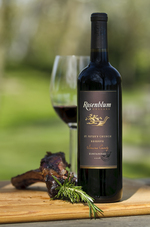
Red Zinfandel: A Rosenblum St Peter's Church Zinfandel, California
In the US, what the wine is called is usually based on what grape makes up most of the bottle, like Merlot or Cabernet Sauvignon.
In some parts of the world, like France, what the wine is called is based on the name of the area where it is grown – like Burgundy, or Bordeaux, or (in Italy) Chianti – and not on what grape is. But don’t worry about it. Areas tend to use specific grapes, such as Pinot Noir in Burgundy or Gamay in Beaujolais.
In the US the main RED wines you’ll find are: Cabernet Sauvignon, which can be robust and dense and “big” – more intensely flavored; Merlot, which can be somewhat lighter, with softer tannins (that tongue-stinging sensation like teabags) than Cabs and thus more “approachable;” and Zinfandel, the red version (not the white), which can be jammy and intense (and higher in alcohol). Pinot Noir makes lighter wines that are still very flavorful and vary a lot depending on the maker. Syrah is increasingly popular among the hip and can range from dense to very dense. ShirazSyrah, common in Australia, and can be light and fruity and very easy to drink. And Petite Syrah, which is less common, varies greatly in taste from winemaker to winemaker, and which a beginning wine drinker usually doesn’t like at first. Barbera is the main component in many Italian wines, and in the US can be made into a flavorful, fruity, easy-to-drink wine.
There are other grapes bottled in the USA that you’ll come across once in a while, and new ones being tried out all over the country, like Cabernet Franc, Primitivo, Charbonno, Nebbiolo, Carignane, and Gamay, and a hodgepodge of other lesser-known grapes. Never pass up a chance to taste something you’ve never heard of!
Red Wines in France

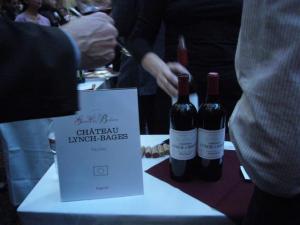
Chateau Lynch-Bages--a $$ "Grand Cru" French Bordeaux.
Burgundies can also be very tasty and easy to drink, light yet flavorful; they are made from Pinot Noir grape, but good Burgundies can be expensive. Very expensive. Very very expensive. So if somebody brings in a Burgundy, make that little eyebrow-raising “Well! I’m impressed” expression so the host will feel flattered – and will think you’re savvy. Score!
Also popular, with a distinctive aroma some love and some don’t, are French RHONE wines (pron. Roan or Rone), which are made of a blend of wines usually starting with a light fruity fun grape called Grenache, plus Syrah to give it some punch, and other random grapes like Mouvedre and Cinsault that you never heard of–up top a dozen grapes in the blend. No way to tell whether you’ll like them until you’ve tried them. Both Rhones and Burgundies (and Bordeaux) can vary widely in taste from winery to winery so if you try one sip and don’t like it, do try sips on other occasions from other makers.
Red Wines in Italy
In Italy, Chianti is easy to drink because it’s not very intense. There are intense Chianti’s, called “Super Tuscans,” that have more flavor, but even these are easy for a beginner to try. Chianti in general is a safe bet as a wine that won’t scour your mouth out. It is based on the Sangiovese grape, which is mellow; California makes a small amount of Sangiovese-based wines too. Another grape, called Tempranillo, bottled in Italy and elsewhere under various names, as well as in the US in small quantities, is also a safely mild wine. Also easy to drink is anything called Valpolicello, which I think is a Sangiovese wine.
Barberas, Brunellos, Nero d’Avola, and Primitivo wines can be stronger, more intensely flavored, but not too tannic, so give them a try – I love them; you might want to work your way up to them. (Primitivo is a Sicilian relative to American Zinfandel, by the way.)
Reds in Other Countries
There are a number of reds from Spain that are gaining popularity. Rioja (ree oh hah!) is the best known, and is usually milder than it likes to think it is. Mostly the popular reds tend to be somewhat heavy-duty, so sip cautiously.
Chile and Argentina make wine from a grape called Malbec (which is only a blending wine in France) – these used to be very cheap but very nasty, but Argentina, in particular, has learned how to make a truly wonderful, grand wine out of it. A great Argentine Malbec can compete head-on with a good California Cabernet — and unfortunately is priced similarly.
OK, that’s a start. Is your brain full yet? You may have to go try a glass of red wine, then!
In PART 2 we’ll look at Roses, Whites, Champagnes, and Dessert Wines!
Got comments? Post below! And SHARE with your friends, especially those just getting started in the wonderful world of wines!


 Posts


